Name:
Isabella Lopez
Location:
London

Your Q Type

Cryptologist

Patterns make sense to you.

You look for the logic behind things, care about getting the details right and are happy to concentrate for as long as a problem needs.

You are at your best with a puzzle that has a right answer. In the spy world, that makes you the person who builds the codes that keep secrets safe, or breaks the ones that hide them.

Standout attributes

  • Inquisitiveness+40
  • Sociability+40
  • Cold Risk+30
All ten attributes

Defining qualities

  1. 1Mathematical
  2. 2Diligent
  3. 3Independent

Your watch-out

Waiting for certainty when an imperfect answer would be sufficient—or assuming others share your level of technical detail.

01Attributes

What you report and how you perform

Unlike other systems, your SPYSCAPE results combine what you say about yourself with how you actually perform.
YouAverage visitor
ConscientiousnessInquisitivenessCold RiskHot RiskComposureSociabilityIntellectAgilityInterpersonalSkillsObservation

Hover over or select an attribute to see what it means.

Inquisitiveness

You 80%Average 40%

Inquisitiveness is the drive to explore, question, and understand the world around you. It’s a key trait behind learning, discovery, and creative thinking—fueling both intellectual insight and emotional depth.

How we measured this: Your answers to 48 statements in the Personality challenge.

40 points above the average visitor. Self-reported: from your answers to the personality questions in the Mind Games.

How your scores were built

Your scores come from two sources. Self-reported scores come from your answers to the personality questions in the Mind Games. Observed scores come from how you performed in the immersive challenges and in the Mind Games puzzle and risk tests.

Together they make a personal profile across ten attributes. Each one is shown against the average visitor, so you can see where you stand out.

SPYSCAPE developed the system with leading psychologists and a former Head of Training at British Intelligence (MI6). More than one million people have now used it.

Self-reportedObserved

Mind

  • Inquisitiveness is the drive to explore, question, and understand the world around you. It’s a key trait behind learning, discovery, and creative thinking—fueling both intellectual insight and emotional depth.

    How we measured this: Your answers to 48 statements in the Personality challenge.

    40 points above the average visitor.

    Self-reported: from your answers to the personality questions in the Mind Games.

Nerve

People

Execution

Attribute guide

Inquisitiveness

Inquisitiveness is the drive to explore, question, and understand the world around you. It’s a key trait behind learning, discovery, and creative thinking—fueling both intellectual insight and emotional depth.

Psychologists have developed robust tools to measure inquisitiveness, focusing on five core facets:

  • Intellectual curiosity: a desire to learn new things
  • Aesthetic sensitivity: an appreciation for beauty and art
  • Active imagination: the capacity for mental exploration
  • Attentiveness to inner feelings: emotional self-awareness
  • Preference for variety: openness to new experiences

Researchers also distinguish between two broad types of inquisitiveness:

  • Epistemic: a search for knowledge and information
  • Perceptual: a desire for new sensations, experiences, and perspectives

Together, these forms of curiosity support innovation, adaptability, and a deeper understanding of people, ideas, and environments.

In the real world

Inquisitiveness drives success in fields that demand exploration, creativity, and insight—such as research, design, journalism, psychology, and investigative work.

People with high inquisitiveness are

  • Curious
  • Open-minded
  • Imaginative and inventive
  • Creative
  • Adaptive

People with low inquisitiveness are

  • Practical
  • Consistent
  • Traditional
  • Habitual
  • Pragmatic

02Your Q Type

Cryptologist

Patterns make sense to you.

In your everyday life

You enjoy finding order in complexity. Patterns, rules and elegant solutions appeal to you, and you may be happiest when you have the time and space to concentrate on a difficult puzzle. Rather than guessing, you prefer to work methodically, checking whether each piece fits. The satisfaction comes when a problem that once seemed impenetrable finally makes sense.

Your watch-out

Waiting for certainty when an imperfect answer would be sufficient—or assuming others share your level of technical detail.

The spy world

Intelligence is a natural basis for Q Types because spy agencies depend on very different kinds of people doing very different kinds of work.

Analysts make sense of complexity, handlers understand people, cryptologists recognise patterns, and operators perform under pressure.

SPYSCAPE uses these real specialist roles as archetypes. Your Q Type is the role that most closely matches your own pattern of attributes.

This profile explores the Cryptologist Q Type, and what it may reveal about you.

Three defining qualities

  1. 1

    Mathematical

    You think in patterns, systems and rules. Numbers and logic feel like tools rather than obstacles.

  2. 2

    Diligent

    You care about getting things exactly right. You check, re-check and rarely leave a detail to chance.

  3. 3

    Independent

    You're comfortable working things out for yourself. Deep, uninterrupted focus is often where you do your best work.

Precision is not about being slow. It is about being sure the answer holds.

03How you think

Patterns give you a way in

  • What are the rules?
  • Where is the pattern?
  • What can I rule out?
  • Where is the weak point?
  • Is this exactly right?

You are likely to be most engaged when a problem has a right answer that is hard to reach. Noise and complexity can make it more interesting, because somewhere inside there is a structure waiting to be found.

You tend to look for the logic underneath.

You trust the logic

When faced with a difficult problem, your instinct is often to understand its structure before attempting a solution.

  • Define the problem precisely
  • Look for patterns and rules
  • Test one idea at a time
  • Work systematically, step by step
  • Check your work for errors
  • Find the weak point in a system

The best solution is one others can use

A useful question for you

Who needs to understand this, and what do they actually need to know?

04Strengths

Your strengths and their flip side

Your Key Qualities

A former Head of training at British Intelligence (MI6) and top psychologists at Imperial College developed our system to calculate these qualities.

They are the outstanding characteristics which make you best suited to your spy role.

While all aspects of your personality, skills and attributes can be valuable, each of these key qualities is like your very own superpower – it’s up to you how you use them.

  • Mathematical

    At its best

    You find the structure hidden inside complex problems.

  • Diligent

    At its best

    You check every detail before you commit to an answer.

  • Independent

    At its best

    You work through problems on your own terms and reach your own conclusions.

Your edge

Knowing when the answer is right, and when it's ready to share.

05At work

In the working world

You bring structured thinking and sustained concentration to exacting problems. You're comfortable working independently, testing ideas and checking the details that determine whether a solution actually works. You appreciate clear specifications, accurate information and time to think. Your strengths are especially useful where security, mathematical reasoning or technical reliability matter more than a quick but approximate answer.

Your Work Style

You’re methodical, focused, and happiest when decoding the hidden logic behind the world. Patterns speak to you. You’re self-motivated, exacting, and often absorbed in work that demands intense concentration. Others may overlook the quiet precision of your thinking – but you know that details change outcomes.

  1. 01Solve precise, technical problems
  2. 02Work with numbers, data and systems
  3. 03Find structure in complexity
  4. 04Build things that have to be reliable
  5. 05Spot errors others miss
  6. 06Work with deep concentration
  7. 07Protect what matters

Follow the kind of work, not the job title

Why These Roles?

Your mathematical mind and independent nature equip you for work that prizes accuracy and discovery. Whether breaking ciphers, analysing data, or tracing linguistic roots, you’re most effective in roles that reward deep thinking and quiet breakthroughs. You don’t just solve puzzles – you expose hidden truths.

Roles to explore

What kind of work makes good use of the way your mind naturally works?

Careers that suit you

  1. 01

    Mathematician

    A maths expert who lends their skills to a variety of clients such as schools, businesses, government agents, and scientists.

    Why? Your scores in intellect, conscientiousness, and inquisitiveness.

  2. 02

    Historian

    Collect, preserve, and evaluate information from the past in order to share it with the world and become a history resource.

    Why? Your scores in intellect, conscientiousness, and inquisitiveness.

  3. 03

    Linguist

    Study the patterns and structure of language, test hypotheses, and apply that knowledge to branches of education, government, and science. Learn more than one language (or code) and translate text and/or speech from one language to another.

    Why? Your scores in intellect, conscientiousness, and inquisitiveness.

  4. 04

    Computer Scientist

    Research and solve computer problems with extensive knowledge of how computers function. Create models and programming that advance the relationship between humans and technology.

    Why? Your scores in intellect, conscientiousness, and inquisitiveness.

  5. 05

    Data Scientist

    Assist parties with organizing and analysing data using computer science and statistics.

    Why? Your scores in intellect, conscientiousness, and composure.

  6. 06

    Database Designer

    Learn code to create and maintain database models for various agencies and businesses. Optimize the way databases function to make accessing, analysing, and storing data easy and safe.

    Why? Your scores in intellect, conscientiousness, and inquisitiveness.

  7. 07

    Medical Diagnostic Technician

    Use state of the art imaging equipment such as MRIs, X-Rays, and Ultrasounds to survey a patient’s insides and provide doctors with necessary visuals for diagnosing.

    Why? Your scores in intellect, conscientiousness, and composure.

  8. 08

    Forensic Science Technician

    Analyse evidence from a crime scene in a laboratory in order to provide investigators with sound data.

    Why? Your scores in intellect, conscientiousness, and composure.

06In action

In the spy world

You would create ciphers to protect your nation's most sensitive communications—or work to break the codes used by hostile targets. Each new encryption method would become part of an ongoing contest between code-makers and codebreakers. Your mission would demand rigorous logic, discretion and the persistence to find meaning in what appears to everyone else to be noise.
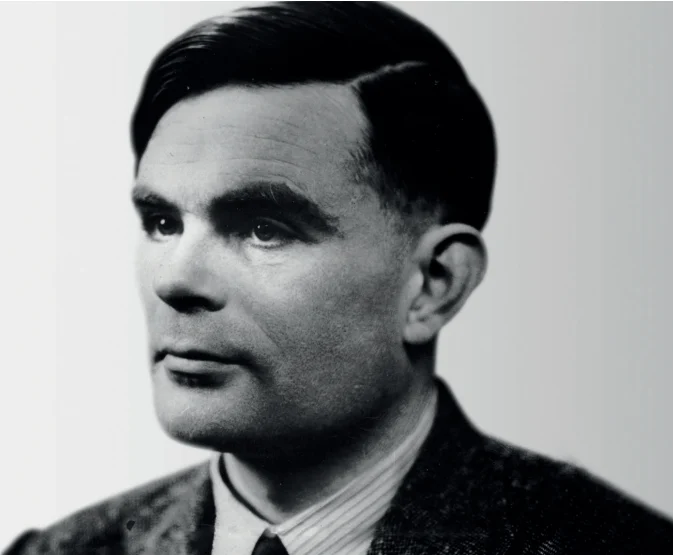
Portrait of Alan Turing

Real-Life Example

Alan TuringBletchley Park, 1940

Alan Turing was an eccentric Cryptologist who changed the course of World War II. An original through and through, he used to hold up his pants with a piece of string and secure his mug to a radiator with a combination lock. Most extraordinarily, he led the design of the “Bombe,” a machine that made it possible to read encrypted German military messages. The resulting intelligence shortened the most lethal war in history by a matter of years.

You don't have to try every possibility. You have to eliminate them.

Complexity hides the answer.

Logic reveals it.

The Job

The cryptologist's job is to stay one step ahead

  • Some codes are simple.
  • Some are fiendishly complex.
  • Some protect a nation's secrets.
  • Some hide an adversary's plans.
  • Every one has a weakness, or is designed not to.

Cryptologists are specialists in ciphers—algorithms used to encrypt and decrypt messages. They either build these ciphers to secure their nation’s most important communications, or crack them in order to access the conversations of hostile targets.

Cryptologists work to continually improve the complexity of their country’s ciphers. At the same time, improvements in computer processing power make it increasingly possible to break them. Thus the makers and breakers of ciphers are in a constant race to block and unlock each other’s ingenious work.

A single overlooked detail can unlock everything.

Fictional example

Sophie Neveu

In Dan Brown’s The Da Vinci Code, Sophie Neveu is the granddaughter of Louvre museum curator Jacques Saunière and a professional Cryptologist with the French police. Thanks to her studies and unorthodox upbringing, she is a master at solving puzzles and breaking codes. These skills lead her (along with the symbologist Robert Langdon) down an enthralling trail to her family’s incredible origins.

Typical Operation

The North Korean navy has recently changed its method for encrypting communications. You analyse the new method and deduce it comes from a commercial source. You know it has some vulnerabilities. Your objective is to break in. If you succeed, your intelligence bosses will gain access to the secret communications between the ships of the navy and their headquarters in Pyongyang.

07Spy gadget

Your spy gadget

Pocket Watch Cipher

Unlike today’s telephones, early wireless communication used channels that were open to everyone at the same time. This cunning Danish device from the 1930s facilitated security when multiple parties were communicating over the same frequencies.

The SPYSCAPE collection spans 300 years of secrets, from Napoleon’s daily intelligence portfolio and George Washington’s invisible ink to space age surveillance technology.

08Spy animal

Your spy animal

Dolphin, the Cryptologist spy animal

Dolphin

Spy role

Cryptologist

Nationality

Israel

Agency

Unit 8200 – IDF

Characteristics

Dolphins decode the unspoken. With minds wired for frequency, rhythm, and layered meaning, they uncover secrets no one else can hear. They speak in clicks, whistles, and signals—nature’s original codebreakers.

Key qualities

Mathematical Diligent Independent

International variants

  • IndiaRAWGanges Dolphin: Freshwater encryption and ancient pattern logic
  • USAONIAtlantic Dolphin: Naval relay and aquatic black ops
  • AustraliaASISOceanic Dolphin: Coral reef sensor triangulation

Other spy animals

Lion – Spymaster

Regal · Strategic · Commanding

Lions lead without spectacle. Their power lies in clarity, decisiveness, and effortless control of complex operations. With panoramic oversight and earned authority, they orchestrate the mission from behind the curtain.

Owl – Intelligence Analyst

Wise · Meticulous · Unshakable

Owls listen before they act. With sharp minds and mythic calm, they make sense of chaos, synthesize scattered intel, and reveal truths others overlook. They don’t miss—they wait.

Crow – Spycatcher

Watchful · Ambiguous · Brilliant

Crows thrive in the grey. Masters of suspicion and pattern recognition, they root out deception before it takes hold. Calculating and elusive, they often know the truth—but won’t show their hand until it matters most.

Crocodile – Hacker

Patient · Hidden · Devastating

Crocodiles lurk beneath the surface, unseen until it’s too late. Masters of stealth and disruption, they infiltrate systems, manipulate networks, and strike with code that bites hard. Their attacks are invisible—until everything stops working.

Dog – Agent Handler

Loyal · Empathic · Intuitive · Persuasive

Dogs are emotional tacticians—specialists in human behaviour and persuasion. Their loyalty isn’t blind—it’s strategic. They identify vulnerabilities, recruit new assets, and maintain deep cover relationships with sources inside adversarial systems. Masters of manipulation through empathy, they stabilize agents, extract intel, and prevent compromise.

Eagle – Surveillance Officer

Focused · Detached · All-seeing

Eagles see what others miss—from kilometres above or through the subtlest gestures. With unmatched vision and unflinching focus, they track patterns, detect anomalies, and anticipate movement before it happens.

Cat – Tech Ops Officer

Elegant · Calculated · Untraceable

Cats are the engineers of espionage. Graceful and exacting, they slip through tight security, plant tech, and vanish without a trace. Curious and cool under pressure, they get the job done in total silence.

Squirrel – Special Ops Officer

Agile · Precise · Relentless

Squirrels are kinetic marvels—quick-thinking, fast-moving, and fearless under pressure. Whether leaping rooftops or slipping through defences, they thrive in missions requiring physical dexterity and sharp reflexes. Chaos fuels them.

Panda – Intelligence Operative

Strong · Methodical · Patient · Underestimated

Pandas move with quiet focus and restrained power. Observant and grounded, they blend into their environment and wait for the exact right moment to act. When they do, it’s decisive and final.
09Other Q Types

Nine other ways of approaching the world

Your Q Type is the closest match to your particular combination of attributes. None is better than another.

1 of 9

Spymaster

Spymasters lead intelligence departments or entire services, typically after broad experience in both field and headquarters roles. They make strategic decisions, weighing risks and benefits, and maintain key relationships with government leaders to secure support and funding. As the public face of the service, they are critical in steering operations and maintaining national confidence.

Being precise does not mean being perfect

Often the most valuable person in the room is the one who knows:

  • Which detail really matters;
  • Which answer is good enough to share;
  • When to explain the logic to everyone else.

Q Type

Your profile is a starting point, not a label

Use it to notice what energizes you, what you contribute naturally, and where a strength can become a blind spot. The useful question is not whether every line describes you perfectly. It is what the profile helps you see more clearly.

How was your mission?

Please help us with our mission. A review takes a minute or two.

Something not right? Tell our team directly.