Name:
Isabella Lopez
Location:
London

Your Q Type

Intelligence Analyst

You see connections others miss.

You ask questions, test explanations against the evidence and keep going until the picture makes sense.

You are at your best when there is a lot of information and someone needs to turn it into a clear judgement. In the spy world, that makes you the person decision-makers rely on to tell them what is really going on.

Standout attributes

  • Inquisitiveness+40
  • Sociability+40
  • Cold Risk+30
All ten attributes

Defining qualities

  1. 1Analytical
  2. 2Inquisitive
  3. 3Determined

Your watch-out

Continuing to gather evidence when the situation calls for a decision—or losing interest once the puzzle is solved.

01Attributes

What you report and how you perform

Unlike other systems, your SPYSCAPE results combine what you say about yourself with how you actually perform.
YouAverage visitor
ConscientiousnessInquisitivenessCold RiskHot RiskComposureSociabilityIntellectAgilityInterpersonalSkillsObservation

Hover over or select an attribute to see what it means.

Inquisitiveness

You 80%Average 40%

Inquisitiveness is the drive to explore, question, and understand the world around you. It’s a key trait behind learning, discovery, and creative thinking—fueling both intellectual insight and emotional depth.

How we measured this: Your answers to 48 statements in the Personality challenge.

40 points above the average visitor. Self-reported: from your answers to the personality questions in the Mind Games.

How your scores were built

Your scores come from two sources. Self-reported scores come from your answers to the personality questions in the Mind Games. Observed scores come from how you performed in the immersive challenges and in the Mind Games puzzle and risk tests.

Together they make a personal profile across ten attributes. Each one is shown against the average visitor, so you can see where you stand out.

SPYSCAPE developed the system with leading psychologists and a former Head of Training at British Intelligence (MI6). More than one million people have now used it.

Self-reportedObserved

Mind

  • Inquisitiveness is the drive to explore, question, and understand the world around you. It’s a key trait behind learning, discovery, and creative thinking—fueling both intellectual insight and emotional depth.

    How we measured this: Your answers to 48 statements in the Personality challenge.

    40 points above the average visitor.

    Self-reported: from your answers to the personality questions in the Mind Games.

Nerve

People

Execution

Attribute guide

Inquisitiveness

Inquisitiveness is the drive to explore, question, and understand the world around you. It’s a key trait behind learning, discovery, and creative thinking—fueling both intellectual insight and emotional depth.

Psychologists have developed robust tools to measure inquisitiveness, focusing on five core facets:

  • Intellectual curiosity: a desire to learn new things
  • Aesthetic sensitivity: an appreciation for beauty and art
  • Active imagination: the capacity for mental exploration
  • Attentiveness to inner feelings: emotional self-awareness
  • Preference for variety: openness to new experiences

Researchers also distinguish between two broad types of inquisitiveness:

  • Epistemic: a search for knowledge and information
  • Perceptual: a desire for new sensations, experiences, and perspectives

Together, these forms of curiosity support innovation, adaptability, and a deeper understanding of people, ideas, and environments.

In the real world

Inquisitiveness drives success in fields that demand exploration, creativity, and insight—such as research, design, journalism, psychology, and investigative work.

People with high inquisitiveness are

  • Curious
  • Open-minded
  • Imaginative and inventive
  • Creative
  • Adaptive

People with low inquisitiveness are

  • Practical
  • Consistent
  • Traditional
  • Habitual
  • Pragmatic

02Your Q Type

Intelligence Analyst

You see connections others miss.

In your everyday life

You're naturally curious about the world around you. You enjoy asking questions, exploring new ideas and making connections that others might miss. You're rarely satisfied with a superficial explanation and, when something really interests you, you're determined to get to the bottom of it. Friends and family may recognize you as the person who always wants to know why.

Your watch-out

Continuing to gather evidence when the situation calls for a decision—or losing interest once the puzzle is solved.

The spy world

Intelligence is a natural basis for Q Types because spy agencies depend on very different kinds of people doing very different kinds of work.

Analysts make sense of complexity, handlers understand people, cryptologists recognise patterns, and operators perform under pressure.

SPYSCAPE uses these real specialist roles as archetypes. Your Q Type is the role that most closely matches your own pattern of attributes.

This profile explores the Intelligence Analyst Q Type, and what it may reveal about you.

Three defining qualities

  1. 1

    Analytical

    You naturally look for relationships between pieces of information. You want to understand how things fit together rather than taking each fact in isolation.

  2. 2

    Inquisitive

    New subjects, unfamiliar ideas and unanswered questions can quickly capture your attention. You are motivated by discovery.

  3. 3

    Determined

    Once a problem matters to you, you are prepared to stay with it. Difficulty can make the answer more interesting rather than less.

Analysis is not about having more information. It is about understanding what the information means.

03How you think

Curiosity gives you the question

  • Why did it happen?
  • What doesn’t fit?
  • What are we missing?
  • What does this connect to?
  • What happens next?

You are likely to be most engaged when there is something to understand. A straightforward problem may hold your attention for a while. A difficult one — where the information is incomplete, contradictory or unclear — can be much more interesting.

You tend to look beneath the surface.

You prefer evidence to assumption

When faced with a difficult question, your instinct is often to gather information before reaching a conclusion.

  • Break a large problem into smaller questions
  • Compare different explanations
  • Look for patterns and inconsistencies
  • Challenge the obvious answer
  • Seek out information other people have overlooked
  • Change your view when the evidence changes

At some point, analysis has to become judgement

A useful question for you

What would I need to know to make a good decision — rather than a perfect one?

04Strengths

Your strengths and their flip side

Your Key Qualities

A former Head of training at British Intelligence (MI6) and top psychologists at Imperial College developed our system to calculate these qualities.

They are the outstanding characteristics which make you best suited to your spy role.

While all aspects of your personality, skills and attributes can be valuable, each of these key qualities is like your very own superpower – it’s up to you how you use them.

  • Analytical

    At its best

    You turn scattered information into a clear assessment.

  • Inquisitive

    At its best

    You ask the question that opens up a new line of enquiry.

  • Determined

    At its best

    You stay with a hard problem until it makes sense.

05At work

In the working world

You enjoy solving complicated problems, particularly when they require research, analysis and fresh thinking. You're good at making sense of information, spotting patterns and identifying possibilities that others haven't considered. You tend to do your best work when you have a clear objective, access to the information you need and the freedom to investigate and reach your own conclusions.

Your Work Style

You think in layers. Where others see fragments, you see systems – patterns, probabilities, and the truths buried between the lines. Focused and inquisitive, you dig deeper, connect the dots, and synthesize the chaos into clarity.

  1. 01Investigate complicated questions
  2. 02Work with information and ideas
  3. 03Develop expertise
  4. 04Identify patterns
  5. 05Challenge assumptions
  6. 06Make evidence-based judgements
  7. 07Anticipate what may happen next

Follow the kind of work, not the job title

Why These Roles?

You’re drawn to complexity and driven to understand. Your analytical mindset and determination make you indispensable in roles that require insight, judgment, and strategic foresight. You don’t just report the facts – you shape how they’re understood.

Roles to explore

What kind of work makes good use of the way you naturally think?

Careers that suit you

  1. 01

    Business Analyst

    Inspect business models to see how efficiency can be improved and technology can be integrated.

    Why? Your scores in conscientiousness, intellect, and cold risk.

  2. 02

    Psychiatrist

    Diagnose and treat mental disorders from a medical perspective.

    Why? Your scores in inquisitiveness, conscientiousness, and cold risk.

  3. 03

    General Practitioner

    A family physician who provides routine care for individuals such as check-ups and vaccinations.

    Why? Your scores in composure, inquisitiveness, and conscientiousness.

  4. 04

    Pharmacist

    Become well-versed in the chemistry of medical drugs and advise patients and health care practitioners on effects of prescribed medications.

    Why? Your scores in inquisitiveness, conscientiousness, and intellect.

  5. 05

    Database Designer

    Learn code to create and maintain database models for various agencies and businesses. Optimize the way databases function to make accessing, analysing, and storing data easy and safe.

    Why? Your scores in intellect, cold risk, and conscientiousness.

  6. 06

    Environmental Scientist

    Research the impact of human activity on different environments throughout the world by analysing every aspect of an ecosystem.

    Why? Your scores in cold risk, inquisitiveness, and intellect.

  7. 07

    Marketing Researcher

    Collect and analyse data on target consumers for a product in order to provide the best marketing strategies.

    Why? Your scores in inquisitiveness, conscientiousness, and intellect.

  8. 08

    Mathematician

    A maths expert who lends their skills to a variety of clients such as schools, businesses, government agents, and scientists.

    Why? Your scores in cold risk, intellect, and conscientiousness.

06In action

In the spy world

Your job would be to turn information into intelligence. You'd examine evidence from secret agents, surveillance operations and other sources, connecting seemingly unrelated clues to uncover threats. You would identify what your service still needs to know, direct attention to the missing pieces and brief Spymasters on what an adversary might do next.
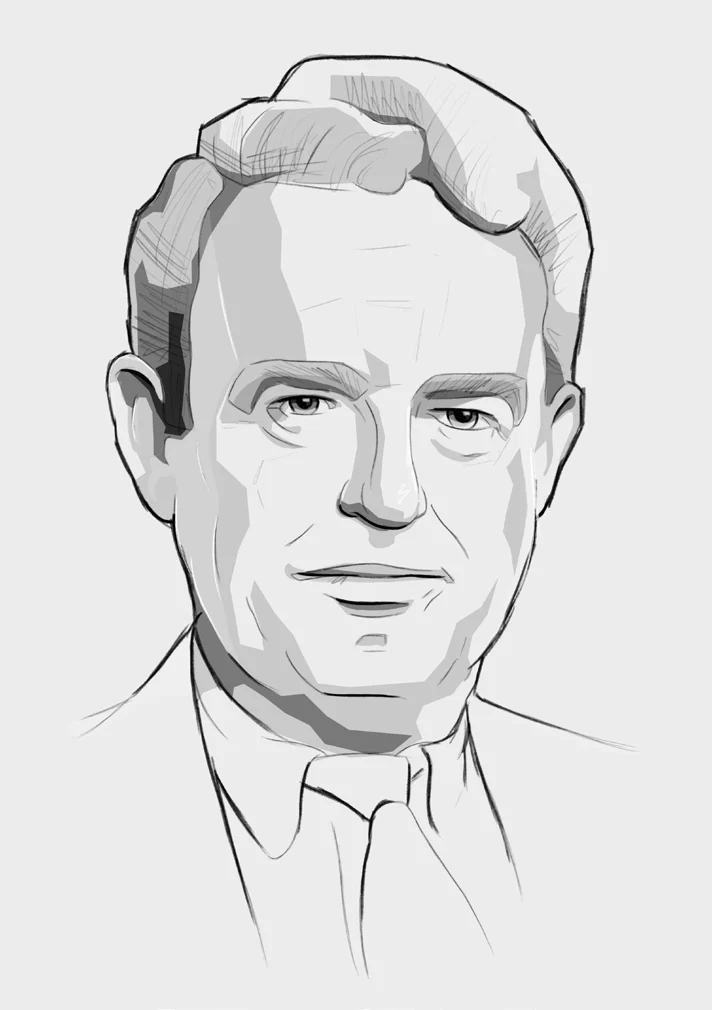
Portrait of Sidney Graybeal

Real-Life Example

Sidney GraybealCuba, October 1962

Sidney Graybeal was a CIA Analyst who, on October 15, 1962, examined photographs taken by a U-2 spy plane flying over Cuba. He recognised missiles covered in canvas and half-constructed launch sites. By comparing the size of the missiles to photos from military parades in Moscow, he identified them as SS-4s, capable of reaching Washington DC. Graybeal assured President Kennedy that the missiles were not yet ready to fire, giving the president a window in which to seek a peaceful solution to the Cuban missile crisis.

The missiles are not yet ready to fire.

Information tells you what is there.

Analysis tells you why it matters.

The Job

The analyst’s job is to decide what matters

  • Some information is public.
  • Some is secret.
  • Some is reliable.
  • Some is wrong.
  • Some may have been created to deceive.

Analysts are the brains of an intelligence service. They turn information into knowledge and knowledge into intelligence. They enlighten Spymasters with presentations and reports.

Their sources range from public websites to secret agents. They have to judge the value of the information they collect, including what is new and unverified. Some Analysts might become experts in the politics of a region. Others in the movements of a terrorist organisation. Still others in the missile technology of a country.

They translate their insights into language Spymasters can quickly understand. They identify gaps in knowledge that other intelligence officers can then try and fill. And, most challengingly, they predict how their specialist area will look in the future.

“We don’t know yet” can be the most important conclusion.

Fictional example

Maya

In the movie Zero Dark Thirty, Maya is a CIA Analyst at the heart of the post-9/11 hunt for Osama bin Laden. Maya’s job is to gather intelligence about Bin Laden’s whereabouts from multiple sources and then make recommendations on where he’s likely to be hiding. The character is based on a real-life group of CIA analysts, mostly women, who tracked Bin Laden for years before his eventual extraction by Navy SEALS.

Typical Operation

Russia is concentrating military forces at its border with Ukraine. You must write a report for your Spymaster on the situation, based on information from a range of covert and overt sources. The final report will include intelligence on the movement of Russian troops, and also on the strategic attitude of the Kremlin to other nations in Eastern Europe.

07Spy gadget

Your spy gadget

Kennedy Press Release

Released by the White House the day after President Kennedy learned of missiles found in Cuba, this press release attempted to pressure the Soviets into abandoning the test explosion of a 50-megaton nuclear bomb, which the Soviets had announced earlier that day.

The SPYSCAPE collection spans 300 years of secrets, from Napoleon’s daily intelligence portfolio and George Washington’s invisible ink to space age surveillance technology.

08Spy animal

Your spy animal

Owl, the Intelligence Analyst spy animal

Owl

Spy role

Intelligence Analyst

Nationality

India

Agency

RAW – Research and Analysis Wing

Characteristics

Owls listen before they act. With sharp minds and mythic calm, they make sense of chaos, synthesize scattered intel, and reveal truths others overlook. They don’t miss—they wait.

Key qualities

Wise Meticulous Unshakable

International variants

  • United KingdomGCHQDigital Owl: cyber-behavioral analyst
  • FinlandSUPOCold Owl: strategic winter seer
  • ItalyAISERome Owl: cultural pattern decoder

Other spy animals

Lion – Spymaster

Regal · Strategic · Commanding

Lions lead without spectacle. Their power lies in clarity, decisiveness, and effortless control of complex operations. With panoramic oversight and earned authority, they orchestrate the mission from behind the curtain.

Crow – Spycatcher

Watchful · Ambiguous · Brilliant

Crows thrive in the grey. Masters of suspicion and pattern recognition, they root out deception before it takes hold. Calculating and elusive, they often know the truth—but won’t show their hand until it matters most.

Crocodile – Hacker

Patient · Hidden · Devastating

Crocodiles lurk beneath the surface, unseen until it’s too late. Masters of stealth and disruption, they infiltrate systems, manipulate networks, and strike with code that bites hard. Their attacks are invisible—until everything stops working.

Dolphin – Cryptologist

Intelligent · Communicative · Elusive

Dolphins decode the unspoken. With minds wired for frequency, rhythm, and layered meaning, they uncover secrets no one else can hear. They speak in clicks, whistles, and signals—nature’s original codebreakers.

Dog – Agent Handler

Loyal · Empathic · Intuitive · Persuasive

Dogs are emotional tacticians—specialists in human behaviour and persuasion. Their loyalty isn’t blind—it’s strategic. They identify vulnerabilities, recruit new assets, and maintain deep cover relationships with sources inside adversarial systems. Masters of manipulation through empathy, they stabilize agents, extract intel, and prevent compromise.

Eagle – Surveillance Officer

Focused · Detached · All-seeing

Eagles see what others miss—from kilometres above or through the subtlest gestures. With unmatched vision and unflinching focus, they track patterns, detect anomalies, and anticipate movement before it happens.

Cat – Tech Ops Officer

Elegant · Calculated · Untraceable

Cats are the engineers of espionage. Graceful and exacting, they slip through tight security, plant tech, and vanish without a trace. Curious and cool under pressure, they get the job done in total silence.

Squirrel – Special Ops Officer

Agile · Precise · Relentless

Squirrels are kinetic marvels—quick-thinking, fast-moving, and fearless under pressure. Whether leaping rooftops or slipping through defences, they thrive in missions requiring physical dexterity and sharp reflexes. Chaos fuels them.

Panda – Intelligence Operative

Strong · Methodical · Patient · Underestimated

Pandas move with quiet focus and restrained power. Observant and grounded, they blend into their environment and wait for the exact right moment to act. When they do, it’s decisive and final.

09Other Q Types

Nine other ways of approaching the world

Your Q Type is the closest match to your particular combination of attributes. None is better than another.

1 of 9

Spymaster

Spymasters lead intelligence departments or entire services, typically after broad experience in both field and headquarters roles. They make strategic decisions, weighing risks and benefits, and maintain key relationships with government leaders to secure support and funding. As the public face of the service, they are critical in steering operations and maintaining national confidence.

Being analytical does not mean always having the answer

Often the most valuable person in the room is the one who knows:

  • Which question has not yet been asked;
  • Which assumption has not yet been tested;
  • Which piece of information might change everything.

Q Type

Your profile is a starting point, not a label

Use it to notice what energizes you, what you contribute naturally, and where a strength can become a blind spot. The useful question is not whether every line describes you perfectly. It is what the profile helps you see more clearly.

How was your mission?

Please help us with our mission. A review takes a minute or two.

Something not right? Tell our team directly.