Name:
Isabella Lopez
Location:
London

Your Q Type

Spycatcher

You notice what doesn’t add up.

You question easy answers, check the details and keep asking until the story holds together.

You are at your best when accuracy matters and something seems not quite right. In the spy world, that makes you the person who finds the traitor others have missed.

Standout attributes

  • Inquisitiveness+40
  • Sociability+40
  • Cold Risk+30
All ten attributes

Defining qualities

  1. 1Perfectionist
  2. 2Analytical
  3. 3Inquisitive

Your watch-out

Spending too long checking every detail or treating a harmless discrepancy as a warning sign.

01Attributes

What you report and how you perform

Unlike other systems, your SPYSCAPE results combine what you say about yourself with how you actually perform.
YouAverage visitor
ConscientiousnessInquisitivenessCold RiskHot RiskComposureSociabilityIntellectAgilityInterpersonalSkillsObservation

Hover over or select an attribute to see what it means.

Inquisitiveness

You 80%Average 40%

Inquisitiveness is the drive to explore, question, and understand the world around you. It’s a key trait behind learning, discovery, and creative thinking—fueling both intellectual insight and emotional depth.

How we measured this: Your answers to 48 statements in the Personality challenge.

40 points above the average visitor. Self-reported: from your answers to the personality questions in the Mind Games.

How your scores were built

Your scores come from two sources. Self-reported scores come from your answers to the personality questions in the Mind Games. Observed scores come from how you performed in the immersive challenges and in the Mind Games puzzle and risk tests.

Together they make a personal profile across ten attributes. Each one is shown against the average visitor, so you can see where you stand out.

SPYSCAPE developed the system with leading psychologists and a former Head of Training at British Intelligence (MI6). More than one million people have now used it.

Self-reportedObserved

Mind

  • Inquisitiveness is the drive to explore, question, and understand the world around you. It’s a key trait behind learning, discovery, and creative thinking—fueling both intellectual insight and emotional depth.

    How we measured this: Your answers to 48 statements in the Personality challenge.

    40 points above the average visitor.

    Self-reported: from your answers to the personality questions in the Mind Games.

Nerve

People

Execution

Attribute guide

Inquisitiveness

Inquisitiveness is the drive to explore, question, and understand the world around you. It’s a key trait behind learning, discovery, and creative thinking—fueling both intellectual insight and emotional depth.

Psychologists have developed robust tools to measure inquisitiveness, focusing on five core facets:

  • Intellectual curiosity: a desire to learn new things
  • Aesthetic sensitivity: an appreciation for beauty and art
  • Active imagination: the capacity for mental exploration
  • Attentiveness to inner feelings: emotional self-awareness
  • Preference for variety: openness to new experiences

Researchers also distinguish between two broad types of inquisitiveness:

  • Epistemic: a search for knowledge and information
  • Perceptual: a desire for new sensations, experiences, and perspectives

Together, these forms of curiosity support innovation, adaptability, and a deeper understanding of people, ideas, and environments.

In the real world

Inquisitiveness drives success in fields that demand exploration, creativity, and insight—such as research, design, journalism, psychology, and investigative work.

People with high inquisitiveness are

  • Curious
  • Open-minded
  • Imaginative and inventive
  • Creative
  • Adaptive

People with low inquisitiveness are

  • Practical
  • Consistent
  • Traditional
  • Habitual
  • Pragmatic

02Your Q Type

Spycatcher

You notice what doesn’t add up.

In your everyday life

You have an eye for things that don't quite add up. Small inconsistencies can catch your attention long after other people have moved on, and you're inclined to ask another question before accepting an easy answer. You like to understand how things really work. When something matters to you, you'll examine the details rather than leave a loose end unexplored.

Your watch-out

Spending too long checking every detail or treating a harmless discrepancy as a warning sign.

The spy world

Intelligence is a natural basis for Q Types because spy agencies depend on very different kinds of people doing very different kinds of work.

Analysts make sense of complexity, handlers understand people, cryptologists recognise patterns, and operators perform under pressure.

SPYSCAPE uses these real specialist roles as archetypes. Your Q Type is the role that most closely matches your own pattern of attributes.

This profile explores the Spycatcher Q Type, and what it may reveal about you.

Three defining qualities

  1. 1

    Perfectionist

    You hold your work to a high standard. You would rather check something thoroughly than rush to a conclusion.

  2. 2

    Analytical

    You test every story against the facts. Gaps in a process or an explanation stand out to you.

  3. 3

    Inquisitive

    You keep asking questions after others have moved on. You want to understand how things really work.

Scrutiny is not about suspecting everyone. It is about making sure the evidence holds.

03How you think

Doubt gives you the question

  • Does this add up?
  • What doesn't fit?
  • Who benefits?
  • Where is the evidence?
  • What have we missed?

You are likely to be most engaged when something does not quite make sense. An easy explanation may satisfy others. A small inconsistency can hold your attention until you understand it.

You tend to check the story against the facts.

You look for what doesn't fit

When faced with a difficult problem, your instinct is often to examine the evidence before accepting an explanation.

  • Question the easy answer
  • Check the details twice
  • Look for gaps and inconsistencies
  • Test each claim against the evidence
  • Think about how things could go wrong
  • Follow up on loose ends

Not every inconsistency is a warning sign

A useful question for you

Is this worth investigating further, or is the evidence telling a different story?

04Strengths

Your strengths and their flip side

Your Key Qualities

A former Head of training at British Intelligence (MI6) and top psychologists at Imperial College developed our system to calculate these qualities.

They are the outstanding characteristics which make you best suited to your spy role.

While all aspects of your personality, skills and attributes can be valuable, each of these key qualities is like your very own superpower – it’s up to you how you use them.

  • Perfectionist

    At its best

    You hold your work to a standard that catches what others let slip.

  • Analytical

    At its best

    You test every story against the facts.

  • Inquisitive

    At its best

    You keep asking until the pieces fit.

Your edge

Knowing which discrepancy matters, and which one you can let go.

05At work

In the working world

You bring care, scrutiny and persistence to problems where mistakes could matter. You're good at examining evidence, questioning assumptions and spotting gaps in a process or explanation. You appreciate precise information and clear expectations, and you may prefer checking something thoroughly to rushing to a conclusion. Your attention to detail is especially useful when protecting people, information or important decisions.

Your Work Style

You operate in the grey. Suspicious by nature and brilliant under pressure, you think like an adversary and move like a strategist. You’re always watching, always questioning – until you see what no one else can.

  1. 01Examine evidence closely
  2. 02Spot gaps and inconsistencies
  3. 03Check work where mistakes matter
  4. 04Question assumptions
  5. 05Protect people and information
  6. 06Work with precise information
  7. 07Investigate what doesn't add up

Follow the kind of work, not the job title

Why These Roles?

Your ambiguity is your weapon. You thrive in uncertainty, pattern-match under pressure, and act with calm precision. You’re not driven by trust – you’re driven by proof. In your world, doubt is not a weakness. It’s survival.

Roles to explore

What kind of work makes good use of the way you naturally think?

Careers that suit you

  1. 01

    Special Effects Artist

    Design computer graphics, practical or optical effects to bring fantastical ideas to life on screen.

    Why? Your scores in conscientiousness, intellect, and inquisitiveness.

  2. 02

    Textbook Author

    Synthesize information on a particular subject to reflect a lesson plan. Write complex ideas in accessible ways.

    Why? Your scores in conscientiousness, intellect, and inquisitiveness.

  3. 03

    Political Scientist

    Become an expert in government systems in order to compare them, predict political outcomes, and develop solutions to political problems.

    Why? Your scores in inquisitiveness, conscientiousness, and cold risk.

  4. 04

    Sociologist

    Study human social behaviour within different cultures and communities in order to explore larger questions about society.

    Why? Your scores in inquisitiveness, conscientiousness, and cold risk.

  5. 05

    Broadcast Journalist

    Investigate news stories and report them on live television or radio, often from the location of the news event.

    Why? Your scores in conscientiousness, and inquisitiveness, and composure.

  6. 06

    Interpreter

    Learn more than one language (or code) and translate text and/or speech from one language to another.

    Why? Your scores in inquisitiveness, intellect, and composure.

  7. 07

    Arts Critic

    Review theatre, art, film, or literature as an authority on the subjects, and inform the public of your expert opinion.

    Why? Your scores in conscientiousness, and inquisitiveness, and sociability.

  8. 08

    Architect

    Plan and design construction projects such as buildings, bridges, and parks that are appealing, safe and functional.

    Why? Your scores in conscientiousness, intellect, and cold risk.

06In action

In the spy world

You would hunt for hostile intelligence officers and insiders secretly working for another service. A seemingly harmless inconsistency could be the first clue to a serious breach. You'd piece together movements, relationships and evidence to identify an adversary before they compromised an operation. Your challenge: know when suspicion is justified—and when the evidence tells a different story.

Real-Life Example

Eric O’NeillFBI

Eric O’Neill was 25 when his FBI superiors tasked him with infiltrating the life of Robert Hanssen, whom they suspected had been selling secrets to the Russians for 22 years. Acting as his new assistant, O’Neill managed to extract the evidence necessary to bring Hanssen to justice. The young Spycatcher took on the worst traitor in FBI history, and won.

Close attention turns suspicion into evidence.

Suspicion raises the question.

Evidence answers it.

The Job

The Spycatcher's job is to think like the adversary

  • Some colleagues are loyal.
  • Some are being approached.
  • Some have already been turned.
  • Some clues are harmless.
  • Some are the first sign of a breach.

Spycatchers work in the complicated world of “counterintelligence”—countering the intelligence operations of nations hostile to their own. They do daily battle with the most ingenious enemies, catching foreign intelligence officers before they turn their colleagues into traitors, and rooting out moles already turned.

Without great Spycatchers, an intelligence service may be seriously undermined. One highly placed mole can inform a foreign nation on how a secret service gets its intelligence. In that case, assets and undercover officers will be endangered and secure communications breached. The human and financial cost can be devastating.

Only by using their curiosity and imagination to think like their adversaries can Spycatchers defend their country effectively.

Curiosity and imagination are their best defence.

Fictional example

Carrie Mathison

Carrie Mathison is a CIA officer in the TV series Homeland. While on assignment in Iraq, she learns that an American prisoner of war had been turned by al-Qaeda. Mathison believes the traitor to be Nicholas Brody, a US Marine sergeant who has recently returned home after eight years in brutal captivity. Despite scepticism from her superiors, Mathison assigns herself the role of Spycatcher.

Typical Operation

A Russian asset reports that Russian Foreign Intelligence has recruited a senior engineer in a US military drone factory, who is funnelling technical secrets back to Moscow. You must decide if the report is accurate. If so, you must identify the engineer before any more damage is done.

07Spy gadget

Your spy gadget

Lie Detector

The CIA and FBI routinely use lie detectors, which work by testing your pulse, breathing and blood pressure. Polygraphs aren’t perfect however, because psychopaths tend to have lower anxiety levels, making it easier for them to keep cool and trick the machine.

The SPYSCAPE collection spans 300 years of secrets, from Napoleon’s daily intelligence portfolio and George Washington’s invisible ink to space age surveillance technology.

08Spy animal

Your spy animal

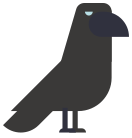
Crow, the Spycatcher spy animal

Crow

Spy role

Spycatcher – Counter Intelligence

Nationality

Pakistan

Agency

ISI – Inter-Services Intelligence

Characteristics

Crows thrive in the grey. Masters of suspicion and pattern recognition, they root out deception before it takes hold. Calculating and elusive, they often know the truth—but won’t show their hand until it matters most.

Key qualities

Watchful Ambiguous Brilliant

International variants

  • RussiaFSBHooded Crow: ideological purist and loyalty
  • USAFBI-CIAPattern Crow: digital whistle filter
  • JapanNPA IntelShrine Crow: silent intuitionist

Other spy animals

Lion – Spymaster

Regal · Strategic · Commanding

Lions lead without spectacle. Their power lies in clarity, decisiveness, and effortless control of complex operations. With panoramic oversight and earned authority, they orchestrate the mission from behind the curtain.

Owl – Intelligence Analyst

Wise · Meticulous · Unshakable

Owls listen before they act. With sharp minds and mythic calm, they make sense of chaos, synthesize scattered intel, and reveal truths others overlook. They don’t miss—they wait.

Crocodile – Hacker

Patient · Hidden · Devastating

Crocodiles lurk beneath the surface, unseen until it’s too late. Masters of stealth and disruption, they infiltrate systems, manipulate networks, and strike with code that bites hard. Their attacks are invisible—until everything stops working.

Dolphin – Cryptologist

Intelligent · Communicative · Elusive

Dolphins decode the unspoken. With minds wired for frequency, rhythm, and layered meaning, they uncover secrets no one else can hear. They speak in clicks, whistles, and signals—nature’s original codebreakers.

Dog – Agent Handler

Loyal · Empathic · Intuitive · Persuasive

Dogs are emotional tacticians—specialists in human behaviour and persuasion. Their loyalty isn’t blind—it’s strategic. They identify vulnerabilities, recruit new assets, and maintain deep cover relationships with sources inside adversarial systems. Masters of manipulation through empathy, they stabilize agents, extract intel, and prevent compromise.

Eagle – Surveillance Officer

Focused · Detached · All-seeing

Eagles see what others miss—from kilometres above or through the subtlest gestures. With unmatched vision and unflinching focus, they track patterns, detect anomalies, and anticipate movement before it happens.

Cat – Tech Ops Officer

Elegant · Calculated · Untraceable

Cats are the engineers of espionage. Graceful and exacting, they slip through tight security, plant tech, and vanish without a trace. Curious and cool under pressure, they get the job done in total silence.

Squirrel – Special Ops Officer

Agile · Precise · Relentless

Squirrels are kinetic marvels—quick-thinking, fast-moving, and fearless under pressure. Whether leaping rooftops or slipping through defences, they thrive in missions requiring physical dexterity and sharp reflexes. Chaos fuels them.

Panda – Intelligence Operative

Strong · Methodical · Patient · Underestimated

Pandas move with quiet focus and restrained power. Observant and grounded, they blend into their environment and wait for the exact right moment to act. When they do, it’s decisive and final.
09Other Q Types

Nine other ways of approaching the world

Your Q Type is the closest match to your particular combination of attributes. None is better than another.

1 of 9

Spymaster

Spymasters lead intelligence departments or entire services, typically after broad experience in both field and headquarters roles. They make strategic decisions, weighing risks and benefits, and maintain key relationships with government leaders to secure support and funding. As the public face of the service, they are critical in steering operations and maintaining national confidence.

Being sceptical does not mean trusting no one

Often the most valuable person in the room is the one who knows:

  • Which detail does not fit;
  • Which doubt is worth following;
  • When the evidence tells a different story.

Q Type

Your profile is a starting point, not a label

Use it to notice what energizes you, what you contribute naturally, and where a strength can become a blind spot. The useful question is not whether every line describes you perfectly. It is what the profile helps you see more clearly.

How was your mission?

Please help us with our mission. A review takes a minute or two.

Something not right? Tell our team directly.