Name:
Isabella Lopez
Team:
Team Blackstone
Location:
London

Your Q Type

Cryptologist

You find order in complexity.

You find order in complexity. You enjoy problems with a right answer, spot structure where others see noise and care about getting the details exactly right.

You do your best work with a clearly defined problem, time to concentrate and the independence to work it through. You are particularly valuable where the work has to be reliable.

Standout attributes

  • Inquisitiveness+40
  • Sociability+40
  • Cold Risk+30
All ten attributes

Defining qualities

  1. 1Mathematical
  2. 2Diligent
  3. 3Independent

Your team role

Connector44%
  • Connector 44%
  • Implementer 32%
  • Explorer 24%
Your team summary

Your watch-out

Perfecting the detail when the moment calls for good enough, or disappearing into the problem when others need to know where you've got to.

01Attributes

What you report and how you perform

Unlike other systems, your SPYSCAPE results combine what you say about yourself with how you actually perform.
YouAverage visitor
ConscientiousnessInquisitivenessCold RiskHot RiskComposureSociabilityIntellectAgilityInterpersonalSkillsObservation

Hover over or select an attribute to see what it means.

Inquisitiveness

You 80%Average 40%

Inquisitiveness is the drive to explore, question, and understand the world around you. It’s a key trait behind learning, discovery, and creative thinking—fueling both intellectual insight and emotional depth.

How we measured this: Your answers to 48 statements in the Personality challenge.

40 points above the average visitor. Self-reported: from your answers to the personality questions in the Mind Games.

How your scores were built

Your scores come from two sources. Self-reported scores come from your answers to the personality questions in the Mind Games. Observed scores come from how you performed in the immersive challenges and in the Mind Games puzzle and risk tests.

Together they make a personal profile across ten attributes. Each one is shown against the average visitor, so you can see where you stand out.

SPYSCAPE developed the system with leading psychologists and a former Head of Training at British Intelligence (MI6). More than one million people have now used it.

Self-reportedObserved

Mind

  • Inquisitiveness is the drive to explore, question, and understand the world around you. It’s a key trait behind learning, discovery, and creative thinking—fueling both intellectual insight and emotional depth.

    How we measured this: Your answers to 48 statements in the Personality challenge.

    40 points above the average visitor.

    Self-reported: from your answers to the personality questions in the Mind Games.

Nerve

People

Execution

Attribute guide

Inquisitiveness

Inquisitiveness is the drive to explore, question, and understand the world around you. It’s a key trait behind learning, discovery, and creative thinking—fueling both intellectual insight and emotional depth.

Psychologists have developed robust tools to measure inquisitiveness, focusing on five core facets:

  • Intellectual curiosity: a desire to learn new things
  • Aesthetic sensitivity: an appreciation for beauty and art
  • Active imagination: the capacity for mental exploration
  • Attentiveness to inner feelings: emotional self-awareness
  • Preference for variety: openness to new experiences

Researchers also distinguish between two broad types of inquisitiveness:

  • Epistemic: a search for knowledge and information
  • Perceptual: a desire for new sensations, experiences, and perspectives

Together, these forms of curiosity support innovation, adaptability, and a deeper understanding of people, ideas, and environments.

In the real world

Inquisitiveness drives success in fields that demand exploration, creativity, and insight—such as research, design, journalism, psychology, and investigative work.

People with high inquisitiveness are

  • Curious
  • Open-minded
  • Imaginative and inventive
  • Creative
  • Adaptive

People with low inquisitiveness are

  • Practical
  • Consistent
  • Traditional
  • Habitual
  • Pragmatic

02Your Q Type

Cryptologist

You find order in complexity.

In your everyday life

You may enjoy puzzles, games and anything with a hidden logic. You notice when something doesn't quite add up, and you'd often rather work it out yourself than be told the answer. Friends and family may know you as the person who reads the instructions properly, or spots the mistake on the bill.

Your watch-out

Perfecting the detail when the moment calls for good enough, or disappearing into the problem when others need to know where you've got to.

The spy world

Intelligence is a natural basis for Q Types because spy agencies depend on very different kinds of people doing very different kinds of work.

Analysts make sense of complexity, handlers understand people, cryptologists recognise patterns, and operators perform under pressure.

SPYSCAPE uses these real specialist roles as archetypes. Your Q Type is the role that most closely matches your own pattern of attributes.

This profile explores the Cryptologist Q Type, and what it may reveal about you.

Three defining qualities

  1. 1

    Mathematical

    You think in patterns, systems and rules. Numbers and logic feel like tools rather than obstacles.

  2. 2

    Diligent

    You care about getting things exactly right. You check, re-check and rarely leave a detail to chance.

  3. 3

    Independent

    You're comfortable working things out for yourself. Deep, uninterrupted focus is often where you do your best work.

Precision is not about being slow. It is about being sure the answer holds.

03How you think

Patterns give you a way in

  • What are the rules?
  • Where is the pattern?
  • What can I rule out?
  • Where is the weak point?
  • Is this exactly right?

You are likely to be most engaged when a problem has a right answer that is hard to reach. Noise and complexity can make it more interesting, because somewhere inside there is a structure waiting to be found.

You tend to look for the logic underneath.

You trust the logic

When faced with a difficult problem, your instinct is often to understand its structure before attempting a solution.

  • Define the problem precisely
  • Look for patterns and rules
  • Test one idea at a time
  • Work systematically, step by step
  • Check your work for errors
  • Find the weak point in a system

The best solution is one others can use

A useful question for you

Who needs to understand this, and what do they actually need to know?

04Strengths

Your strengths and their flip side

  • Precision

    At its best

    Your work can be trusted because you get the details right.

  • Logic

    At its best

    You find structure where others see chaos.

  • Independence

    At its best

    You can work through hard problems without needing direction.

  • Persistence

    At its best

    You keep going until the problem gives way.

Your edge

Knowing when the answer is right, and when it's ready to share.

05At work

Your Q Type does not point to one career

It points to the kinds of problems and environments that may bring out your strengths.
  1. 01Solve precise, technical problems
  2. 02Work with numbers, data and systems
  3. 03Find structure in complexity
  4. 04Build things that have to be reliable
  5. 05Spot errors others miss
  6. 06Work with deep concentration
  7. 07Protect what matters

Follow the kind of work, not the job title

You are likely to value environments where accuracy is respected and people are given the time and space to think.

These strengths can matter almost anywhere

  • Technology
  • Data
  • Engineering
  • Cybersecurity
  • Finance
  • Science
  • Mathematics
  • Research
  • Linguistics
  • Systems design

What kind of work makes good use of the way your mind naturally works?

06Team

Team Blackstone

Your team role shows how you tend to contribute. Connectors read people, sensing the mood, building trust, holding the group together and winning others over. Implementers turn plans into action and see them through, closing things out while others are still talking. Explorers dig beneath the surface, questioning assumptions, weighing alternatives and spotting patterns others may miss.
44%
32%
24%
  • Connector
  • Implementer
  • Explorer

Your primary role

Connector

44%

You naturally tune in to people: reading the mood, building trust and helping the group stay together under pressure. The team will look to you to keep the human side of the work in view and ease unnecessary friction. Your watch-out is avoiding conflict that needs to happen, or taking too much responsibility for keeping everyone comfortable.

ComparisonConnectorImplementerExplorer
Your roles
Lead role
Supporting role
Background role
Team average
Lead role
Background role
Supporting role
Global average
Lead role
Supporting role
Background role
Lead roleSupporting roleBackground role

But a team can have too much of a good thing: too many Connectors and everyone may get along while progress quietly stalls; too many Implementers and it may charge ahead before spotting the flaw that could sink the plan; too many Explorers and it can analyse brilliantly but struggle to decide. The strongest teams combine all three strengths to turn good thinking into decisive, effective action.

Secondary role

Implementer

32%

You give yourself a clear deadline or first step and you can become a reliable driver of delivery, particularly when the team needs someone to create momentum. It is a strength you can choose to bring forward when the situation calls for it.

Secondary role

Explorer

24%

Explorer is your least natural role, so the risk is moving to a decision before the thinking has been fully tested. On important calls, actively seek out the team’s stronger Explorer and use their questions to strengthen the decision rather than seeing them as a brake on progress.

What a Cryptologist brings to a team

In a team, you are often the person who gets the detail right. You find structure in messy problems, check the work carefully and build things others can rely on.

Your challenge is to keep others informed. Share where you have got to, and explain your answer in terms the team can use.

07In action

Cryptologist in action

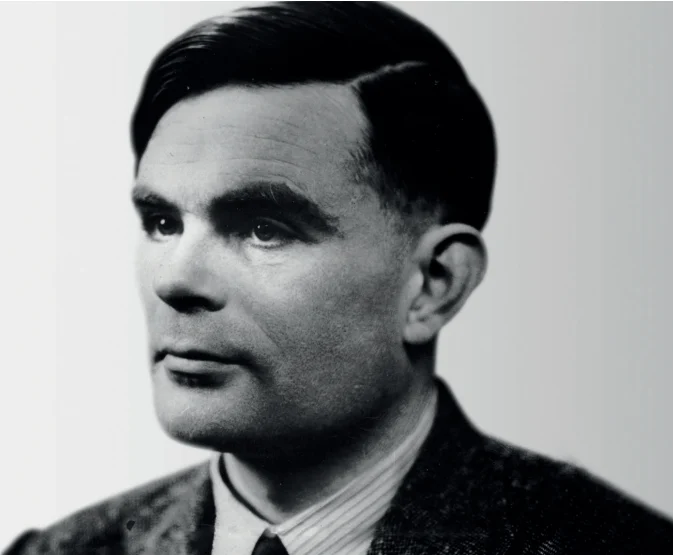
Sketch portrait of Alan Turing

Alan TuringBletchley Park, 1940

German forces encrypt their messages with the Enigma machine. Its settings change every day, and the number of possible combinations is astronomical. The Germans believe it cannot be broken.

At Bletchley Park, a mathematician named Alan Turing sees it differently. Building on earlier work by Polish codebreakers, he focuses on a weakness: German messages often contain predictable words and phrases.

If you can guess part of a message, you can rule out most of the possible settings.

You don't have to try every possibility. You have to eliminate them.

Turing leads the design of the Bombe, a machine that does exactly that, at speed. The intelligence it helps produce is often credited with shortening the war by as much as two years.

Complexity hides the answer.

Logic reveals it.

How cryptologists work

The cryptologist's job is to stay one step ahead

  • Some codes are simple.
  • Some are fiendishly complex.
  • Some protect a nation's secrets.
  • Some hide an adversary's plans.
  • Every one has a weakness, or is designed not to.

They build ciphers that keep vital communications secure and break the ones their adversaries rely on. As computing power grows, codes that once seemed unbreakable become vulnerable, so the makers and breakers of ciphers are locked in a constant race.

A single overlooked detail can unlock everything.

08Other Q Types

Nine other ways of approaching the world

Your Q Type is the closest match to your particular combination of attributes. None is better than another.

1 of 9

Intelligence Analyst

Sees connections others miss.

Analytical, inquisitive and determined. Enjoys understanding complex problems, spotting patterns and working out what the evidence really means.

Being precise does not mean being perfect

Often the most valuable person in the room is the one who knows:

  • Which detail really matters;
  • Which answer is good enough to share;
  • When to explain the logic to everyone else.

Q Type

Your profile is a starting point, not a label

Use it to notice what energizes you, what you contribute naturally, and where a strength can become a blind spot. The useful question is not whether every line describes you perfectly, it is what the profile helps you see more clearly.

How was your mission?

Please help us with our mission. A review takes a minute or two.

Something not right? Tell our team directly.