Name:
Isabella Lopez
Group:
Brixton Academy
Location:
London

Your Q Type

Cryptologist

Patterns make sense to you.

You enjoy finding order in complexity. Patterns, rules and elegant solutions appeal to you, and you would rather work methodically than guess.

At school, you are at your best with time and space to concentrate on a hard problem. Maths, codes and languages reward the careful, independent thinking you do well.

Standout attributes

  • Inquisitiveness+40
  • Sociability+40
  • Cold Risk+30
All ten attributes

Defining qualities

  1. 1Mathematical
  2. 2Diligent
  3. 3Independent

Your watch-out

Waiting for certainty when an imperfect answer would be sufficient—or assuming others share your level of technical detail.

01Attributes

What you say and what you do

Unlike other systems, your SPYSCAPE results combine what you say about yourself with how you actually perform.
YouAverage visitor
ConscientiousnessInquisitivenessCold RiskHot RiskComposureSociabilityIntellectAgilityInterpersonalSkillsObservation

Hover over or select an attribute to see what it means.

Inquisitiveness

You 80%Average 40%

The drive to explore, question and understand the world around you. It is a key trait behind learning, discovery and creative thinking.

How we measured this: Your answers to 48 statements in the Personality challenge.

At school: Asking “why?” in science, digging into sources in history and reading beyond the set text.

40 points above the average visitor. Self-reported: from your answers to the personality questions in the Mind Games.

How your scores were built

Your scores come from two sources. Self-reported scores come from your answers to the personality questions in the Mind Games. Observed scores come from how you actually did in the immersive challenges and in the Mind Games puzzle and risk tests.

Put together, they build your personal profile across ten attributes. Each one is shown against the average visitor, so you can see where you stand out.

SPYSCAPE developed the system with leading psychologists and a former Head of Training at British Intelligence (MI6). More than one million people have now used it.

Self-reportedObserved

Mind

  • The drive to explore, question and understand the world around you. It is a key trait behind learning, discovery and creative thinking.

    How we measured this: Your answers to 48 statements in the Personality challenge.

    At school: Asking “why?” in science, digging into sources in history and reading beyond the set text.

    40 points above the average visitor.

    Self-reported: from your answers to the personality questions in the Mind Games.

Nerve

People

Execution

02Your Q Type

Cryptologist

Patterns make sense to you.

In your everyday life

You enjoy finding order in complexity. Patterns, rules and elegant solutions appeal to you, and you may be happiest when you have the time and space to concentrate on a difficult puzzle. Rather than guessing, you prefer to work methodically, checking whether each piece fits. The satisfaction comes when a problem that once seemed impenetrable finally makes sense.

Your watch-out

Waiting for certainty when an imperfect answer would be sufficient—or assuming others share your level of technical detail.

The spy world

Intelligence is a natural basis for Q Types because spy agencies depend on very different kinds of people doing very different kinds of work.

Analysts make sense of complexity, handlers understand people, cryptologists recognise patterns, and operators perform under pressure.

SPYSCAPE uses these real specialist roles as archetypes. Your Q Type is the role that most closely matches your own pattern of attributes.

This profile explores the Cryptologist Q Type, and what it might reveal about you.

Three defining qualities

  1. 1

    Mathematical

    You spot the pattern hidden inside a hard problem, in a maths puzzle, a number sequence or a line of code.

  2. 2

    Diligent

    You check every step of your working before you commit to an answer.

  3. 3

    Independent

    You like working things out for yourself and reaching your own conclusions, even when the rest of the class has moved on.

Being a cryptologist isn’t about guessing. It’s about working it out.

Your spy animal

Dolphin

Nationality:
Israel
Agency:
Unit 8200 – IDF
  • Mathematical
  • Diligent
  • Independent

Dolphins decode the unspoken. With minds wired for frequency, rhythm, and layered meaning, they uncover secrets no one else can hear. They speak in clicks, whistles, and signals—nature’s original codebreakers.

Illustration of the dolphin, the Cryptologist spy animal

03How you think

Patterns give you the question

  • What’s the pattern?
  • What are the rules?
  • Does every piece fit?
  • Have I checked it?
  • Is there a simpler answer?

You are likely to be most engaged when there is a code to crack. A question with an obvious answer can be interesting. A problem that looks like nonsense until you find its structure, in maths, languages or computing, can be much more interesting.

You tend to start with the pattern.

You start with the pattern

When faced with a difficult problem, your instinct is to look for the structure underneath, then work through it one careful step at a time.

  • Look for the rule behind a sequenceMathsScience
  • Work through a method one step at a timeMathsScience
  • Check each answer before moving onMathsComputing
  • Spot the patterns in how a language worksLanguagesEnglish
  • Show the same idea in different waysMathsComputing

At some point, near enough has to be good enough

A useful question for you

Do I need certainty here, or a good answer?

Useful in tests, too: moving on from one stubborn question gives you time to answer the rest.

04Strengths

Your strengths and their flip side

  • Mathematical

    At its best

    You find the structure hidden inside a hard problem.

  • Diligent

    At its best

    You check every step before you commit to an answer.

  • Independent

    At its best

    You work through problems on your own and reach your own conclusions.

  • Patience

    At its best

    You keep going when a problem takes a long time to crack.

05At school

Your strengths in the classroom

Your Q Type doesn’t point to one favourite subject. It points to ways of thinking you can use right across Key Stage 3. Here is where the curriculum asks for the skills a Cryptologist relies on.
  • Maths

    Key Stage 3 curriculum

    “Make and test conjectures about patterns and relationships; look for proofs or counter-examples.”

    The Cryptologist link

    Cryptologists look for the patterns that could crack a cipher, then test whether they hold.

  • Computing

    Key Stage 3 curriculum

    “Understand how numbers can be represented in binary, and be able to carry out simple operations on binary numbers [for example, binary addition, and conversion between binary and decimal].”

    The Cryptologist link

    Ciphers are algorithms, and every gain in computer processing power makes codes easier to break.

  • Languages

    Key Stage 3 curriculum

    “Read and show comprehension of original and adapted materials from a range of different sources, understanding the purpose, important ideas and details, and provide an accurate English translation of short, suitable material.”

    The Cryptologist link

    Breaking a code is a kind of translation: turning a message nobody can read into one that makes sense.

  • Science

    Key Stage 3 curriculum

    “Pay attention to objectivity and concern for accuracy, precision, repeatability and reproducibility.”

    The Cryptologist link

    A former Director of GCHQ singles out Cryptologists for their meticulous attention to the finest details.

  • History

    Key Stage 3 curriculum

    “Identify significant events, make connections, draw contrasts, and analyse trends within periods and over long arcs of time.”

    The Cryptologist link

    The intelligence from Alan Turing’s codebreaking shortened the Second World War by a matter of years.

Curriculum lines are quoted from the Key Stage 3 programmes of study, National Curriculum in England.

Beyond school: follow the kind of work, not the job title

Your mathematical mind and independent nature equip you for work that prizes accuracy and discovery. Whether breaking ciphers, analysing data, or tracing linguistic roots, you’re most effective in roles that reward deep thinking and quiet breakthroughs. You don’t just solve puzzles – you expose hidden truths.

Careers your Q Type points towards

  • Mathematician
  • Historian
  • Linguist
  • Computer Scientist
  • Data Scientist
  • Database Designer
  • Medical Diagnostic Technician
  • Forensic Science Technician

06In action

Cryptologist in action

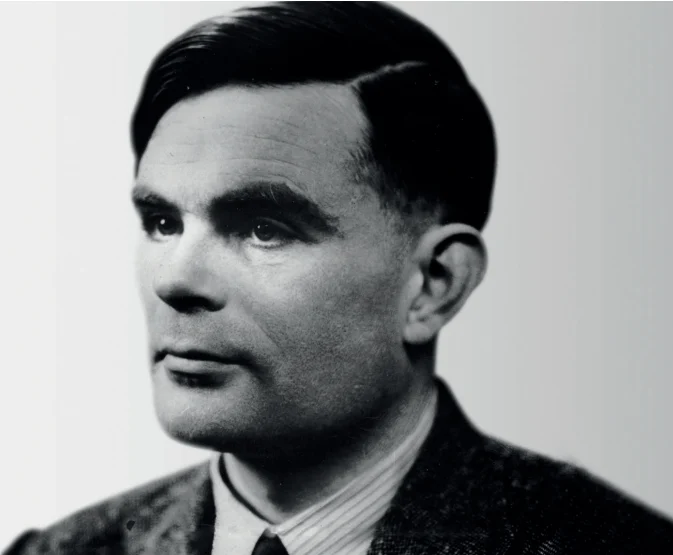
Portrait photograph of Alan Turing

Alan TuringSecond World War

Alan Turing was an eccentric Cryptologist who changed the course of the Second World War.

He was an original through and through. He held up his trousers with a piece of string, and locked his mug to a radiator with a combination lock.

Most extraordinarily, he led the design of a machine called the “Bombe”. It made one thing possible:

Reading encrypted German military messages.

The intelligence it produced shortened the most lethal war in history by a matter of years.

Spotting the pattern gets you started.

Sticking with it cracks the code.

The school link

Turing led the design of the Bombe, a machine that made it possible to read encrypted German military messages. Logic, algorithms and how a computer follows instructions are all part of Key Stage 3 maths and computing.

  • Maths
  • Computing
  • History

The cryptologist’s job is to stay one step ahead

  • Some make ciphers.
  • They protect their nation’s secrets.
  • Others break them.
  • They read the enemy’s messages.
  • The race never stops.

Cryptologists are specialists in ciphers: algorithms used to encrypt and decrypt messages. Some build ciphers to secure their nation’s most important communications. Others crack ciphers to access the conversations of hostile targets.

Cryptologists keep making their country’s ciphers more complex. At the same time, more powerful computers make ciphers easier to break.

The makers and breakers of ciphers are in a constant race to block and unlock each other’s work.

Your spy object

Pocket watch cipher

A Danish device from the 1930s

Think like a cryptologist. If anyone can listen in, the message itself has to keep the secret.

Unlike today’s telephones, early wireless communication used channels that were open to everyone at the same time. This cunning Danish device from the 1930s kept messages secure when several people were communicating over the same frequencies.

From the SPYSCAPE collection

The SPYSCAPE collection spans 300 years of secrets, from Napoleon’s daily intelligence portfolio and George Washington’s invisible ink to space age surveillance technology.

07Other Q Types

Nine other ways of approaching the world

Your Q Type is the closest match to your mix of attributes. Spy agencies need very different kinds of people, and none of these roles is better than another.

1 of 9

Spymaster

Sees the bigger picture.

Strategic, empathetic and comfortable taking responsibility. Looks beyond the immediate problem, weighs competing priorities and helps others understand where things are heading.

In the spy world

Spymasters lead intelligence departments or whole services. They make strategic decisions, weigh risks and benefits, and keep the support of government leaders.

Spy animal

Illustration of the lion, the Spymaster spy animal

Lion

  • Regal
  • Strategic
  • Commanding

Lions lead without spectacle. Their power lies in clarity, decisiveness and effortless control of complex operations. With panoramic oversight and earned authority, they run the mission from behind the curtain.

Being good at puzzles does not mean working everything out alone

Often the most valuable person in the room is the one who knows:

  • When to keep checking;
  • When your answer is good enough to hand in;
  • When to ask someone to look at it.

Q Type

Your profile is a starting point

Use it to notice what gets you fired up in lessons, what you bring to a group without even trying, and where a strength can turn into a blind spot. The useful question isn’t whether every line describes you perfectly. It’s what the profile helps you see more clearly.

How was your mission?

Please help us with our mission. A review takes a minute or two.

Something not right? Tell our team directly.